Last reviewed: November 20, 2026
Having a lawyer and having a filed complaint are different things. In the Depo-Provera settlement process, that distinction matters before November 30. CMO 18 directs counsel to upload complaints for a limited group through a separate administrative docket.
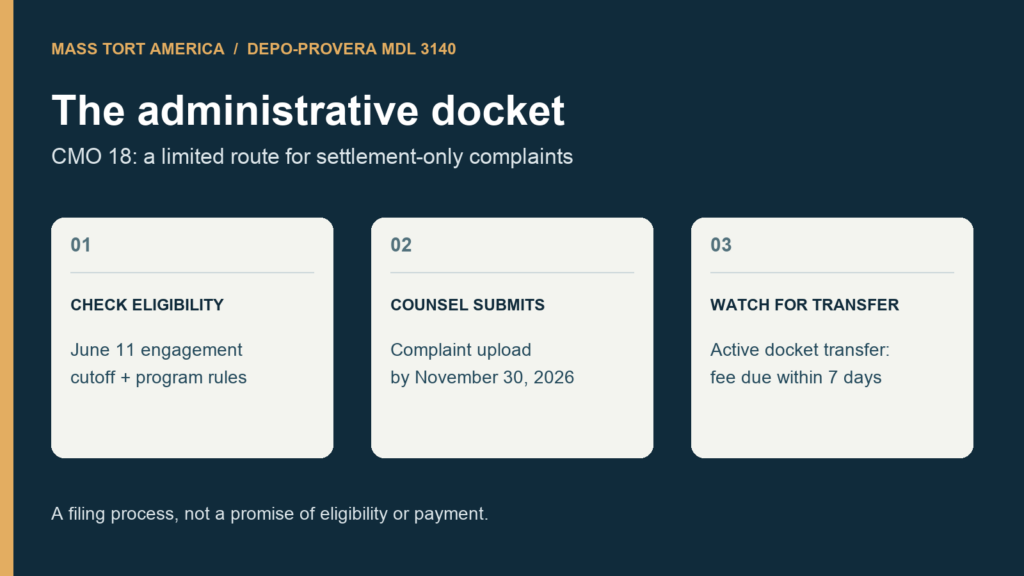
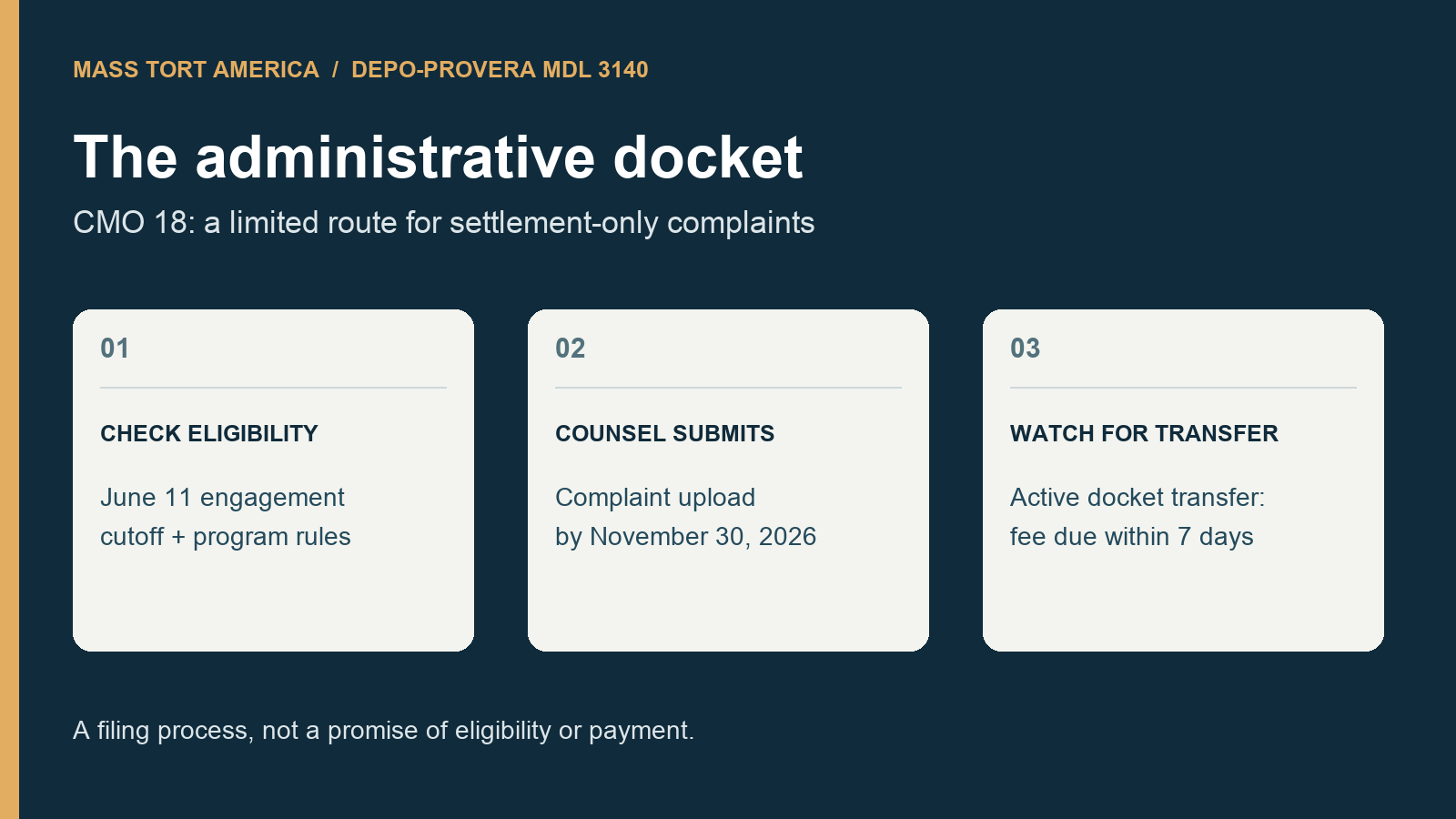
The September 15 order provides a no-initial-fee route for eligible settlement-only complaints. Its conditions include an engagement letter signed on or before June 11, 2026. It is not a general free-filing offer for new claims.
We checked the order and the court’s published orders list on November 20. Our Depo-Provera litigation hub covers the underlying allegations; this article explains the narrower filing route and what changes if a complaint is transferred to the active MDL docket.
Who can use this docket?
Paragraph 4 limits the route to someone filing solely to participate in the Settlement Program, who signed an engagement letter with counsel to pursue an MPA Product claim on or before June 11, 2026, and who is eligible for the program. These are cumulative conditions, not alternative ways to qualify.
June 11 concerns signing with counsel. It does not describe the date of a shot or diagnosis. A signed letter alone cannot answer the separate eligibility question.
BrownGreer was directed to send counsel a list of clients who appeared permitted to use the docket. Paragraph 3 also permits counsel to submit for an additional client counsel believes qualifies for this route. An omitted name is something to ask the lawyer to check, rather than a reason to assume the claim was rejected.
What counsel must submit by November 30
There are two handoffs in CMO 18. First, counsel uploads a compliant complaint to the Depo-Provera MDL Centrality Portal as BrownGreer directs, on or before November 30, 2026. BrownGreer checks for duplicates and questions about permission to use the docket. Then it sends the identified complaints and necessary information securely to the clerk for docketing.
Ask counsel where your complaint is in that sequence. “Registered,” “uploaded” and “docketed” need not describe the same task. A public case-review form does not complete this court-directed upload.
CMO 14 identifies November 30 as the registration deadline understood by the court; CMO 18 adds the complaint instruction for the specified group. Our registration and outside-settlement article explains the broader program deadline. Ask for confirmation of both requirements if counsel says this route applies to you. These are suggested questions, not new court requirements.
No fee now does not mean no fee later
No initial filing fee is required on this administrative docket. But CMO 18 says that if a complaint moves to the active MDL docket, the plaintiff must pay the standard court filing fee within seven days after transfer. Failure to pay on time results in dismissal.
This matters if BrownGreer determines that a claimant does not meet the administrative-docket criteria. After notice to the court, the complaint is to move to the active docket. The fee obligation also applies to a transfer for any other reason; it is not limited to an eligibility dispute.
Ask counsel for the transfer date if your case moves. That date starts the seven-day period, not November 30. Also ask what obligations follow under CMO 14: paragraph 7 of CMO 18 makes a transferred claimant a “Future Filed Plaintiff” subject to the active docket’s orders. The public order does not state a fee amount, and it cannot tell us whether your particular case has transferred.
Two short questions
What if I hired my lawyer after June 11?
That would not satisfy CMO 18’s engagement-letter condition for this administrative route. It does not, by itself, tell us whether you can pursue a claim another way. Ask for individual advice about filing options and deadlines instead of assuming November 30 is a universal lawsuit deadline.
What does a filed complaint tell me about payment?
It tells you a complaint has been filed, not that an individual amount or payment date has been awarded. CMO 18 does not supply either. CMO 14 says defendants admit no fault or liability in connection with the settlement. Filing is not a finding that Depo-Provera caused a particular claimant’s meningioma.
Attorney Advertising. General information only, not legal or medical advice. Reading this does not create an attorney-client relationship. Eligibility, compensation and outcomes are not guaranteed. Medical decisions belong with your treating clinician.
Sources
- CMO 18: administrative docket, paragraphs 2–4 and 7
- CMO 14: settlement registration and ongoing litigation
- Northern District of Florida: MDL 3140 orders by date

Robert B. Baker, Esq., B.C.S. — Board-Certified Civil Trial Lawyer. 30+ years of trial experience, more than $400 million recovered for clients. About Robert Baker →
This website provides general information. Your circumstances require an individual review.