Last reviewed: November 23, 2026
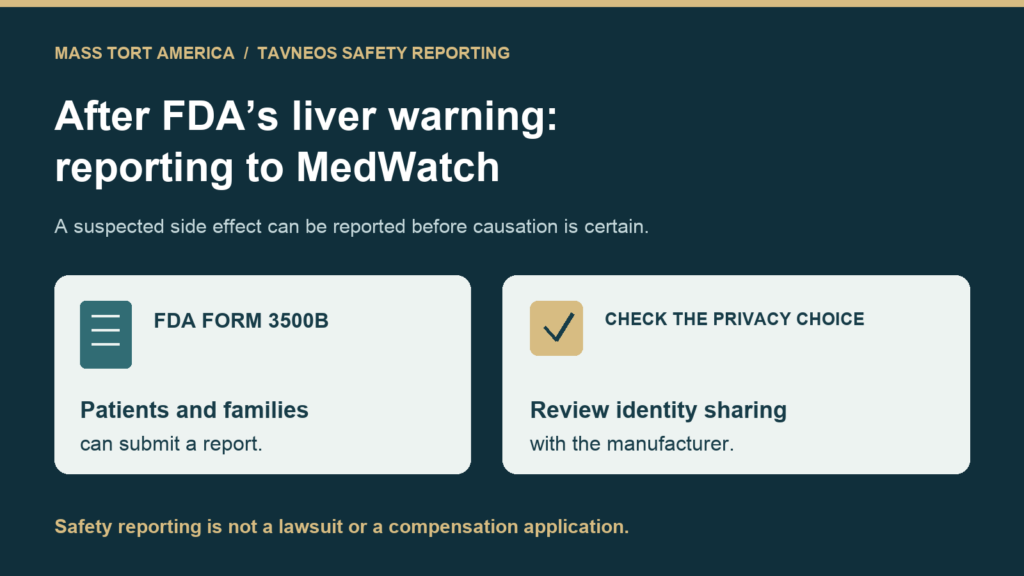
FDA’s Tavneos liver-injury warning ends with a request that is easy to miss: patients and healthcare professionals should report suspected side effects to MedWatch. You do not need a final answer about what caused the injury before sending that report. FDA’s reporting instructions say suspicion of an association is enough.
That is a different task from asking a lawyer to review a Tavneos liver injury claim. MedWatch collects safety information for FDA. It is not a lawsuit or an application for compensation. Here is how to use the reporting route without confusing those purposes.
Start with care, not the form
If symptoms are happening now, contact a healthcare professional immediately. FDA’s March 31, 2026 warning names unusual itching, yellowing skin or eyes, dark urine, unusual tiredness and right-upper-abdominal pain among possible signs of liver injury. Discuss whether to continue Tavneos or change treatment with the treating clinician. Do not wait to finish paperwork.
The warning describes serious drug-induced liver injury, including fatal cases and vanishing bile duct syndrome. It asks patients and professionals to report side effects while FDA continues monitoring. We rechecked that communication for this article; this is an explanation of its reporting request, not an announcement of a new warning or a new case count.
Choose the patient form, not an industry reporting route
FDA’s reporting page lists several forms for different users. A patient or family member reporting a suspected Tavneos injury can start with the online voluntary reporting link or the consumer-friendly Form FDA 3500B. The professional version is Form 3500. Industry mandatory reporting is a separate entry; you do not need to act as a drug manufacturer to send a patient report.
If you use the PDF, read its own directions. The section letters discussed here are from 3500B. A direction about Section D in the professional 3500 instructions does not mean the consumer form’s Section D is where Tavneos belongs: in 3500B, Section C covers medicines and Section D covers medical devices.
Your clinician can help with medical details. FDA says patients may also report themselves if their healthcare professional does not complete the form. Form 3500B allows someone else to fill it out for the patient and says to send as much information as possible even when some details are missing.
What a clear account of a Tavneos injury should explain
Start with the event, not a demand for a particular outcome. Consumer Form 3500B asks what happened and when. FDA’s reporting instructions ask for the clinical course: the person’s condition before the event, symptoms, treatment and outcome. Tell that sequence using the information you have. Distinguish a clinician’s diagnosis from a family’s observation and leave uncertainty visible.
Next identify the product. The consumer form asks for the name on the package, strength, use dates and other details. Photos can help, but FDA says they are not required and says not to send the product itself. Missing details do not justify copying another person’s package information.
Then check the outcome description. An emergency visit does not automatically mean admission; FDA’s instructions distinguish them. A liver-test abnormality is not a reason to write in liver failure without that diagnosis. Include other medicines, supplements and medical conditions in their fields instead of trying to make the report point only toward Tavneos.
Finally, answer the stop-and-restart questions as history. The consumer form includes a “Didn’t restart” option. Never restart a medicine to make the report more complete. Take treatment decisions to the treating professional and report what actually occurred.
The patient fields and the reporter’s identity serve different purposes
A family member completing Form 3500B should pause at Sections E and F. Section E concerns the person who had the problem and asks for that person’s initials and health information. Section F asks who is filling out the form, including their name and contact details. These may be two different people.
The form is not presented as anonymous reporting. Its opening privacy explanation says the reporter’s name and contact information may be shared with the manufacturer so the company can better understand the problem, unless the reporter requests otherwise. Section F provides a box to request that the reporter’s identity not be disclosed to the manufacturer.
That is a specific choice about manufacturer disclosure, not a promise that all medical details disappear from the report. Read the form’s wording and make the choice that reflects your wishes. If you are helping someone else, do not assume that their preference is the same as yours.
FDA says it will reply after receiving the report and contact the reporter personally only if it needs more information. The reply acknowledges receipt; it is not a conclusion about the cause of the injury. Keep that distinction in mind if the family later shares the reply with a lawyer.
Keep safety reporting separate from a legal review
The form explicitly says submission does not constitute an admission that medical personnel or the product caused or contributed to the event. Report honestly even when the medical explanation is still being investigated. A safety report does not decide liability or promise payment.
Regulatory notices also have different purposes. Our explanation of Canada’s Tavneos trial-data review separates questions about evidence of benefit from the liver-safety warning. Neither that review nor a MedWatch acknowledgment substitutes for advice about an individual injury claim. If you want legal advice, ask a lawyer separately rather than treating FDA’s reporting process as a claim filing.
Sources
- FDA: Tavneos serious liver injury safety communication, March 31, 2026
- FDA: Reporting Serious Problems to FDA, including the online reporting link
- FDA: Consumer reporting Form 3500B, pages 1–8
- FDA: Form 3500 instructions, including reporting when causation is uncertain
Attorney advertising. General information only, not medical or legal advice. Reading this article does not create an attorney-client relationship. Compensation and outcomes are not guaranteed. Do not change prescribed treatment without consulting your healthcare professional.
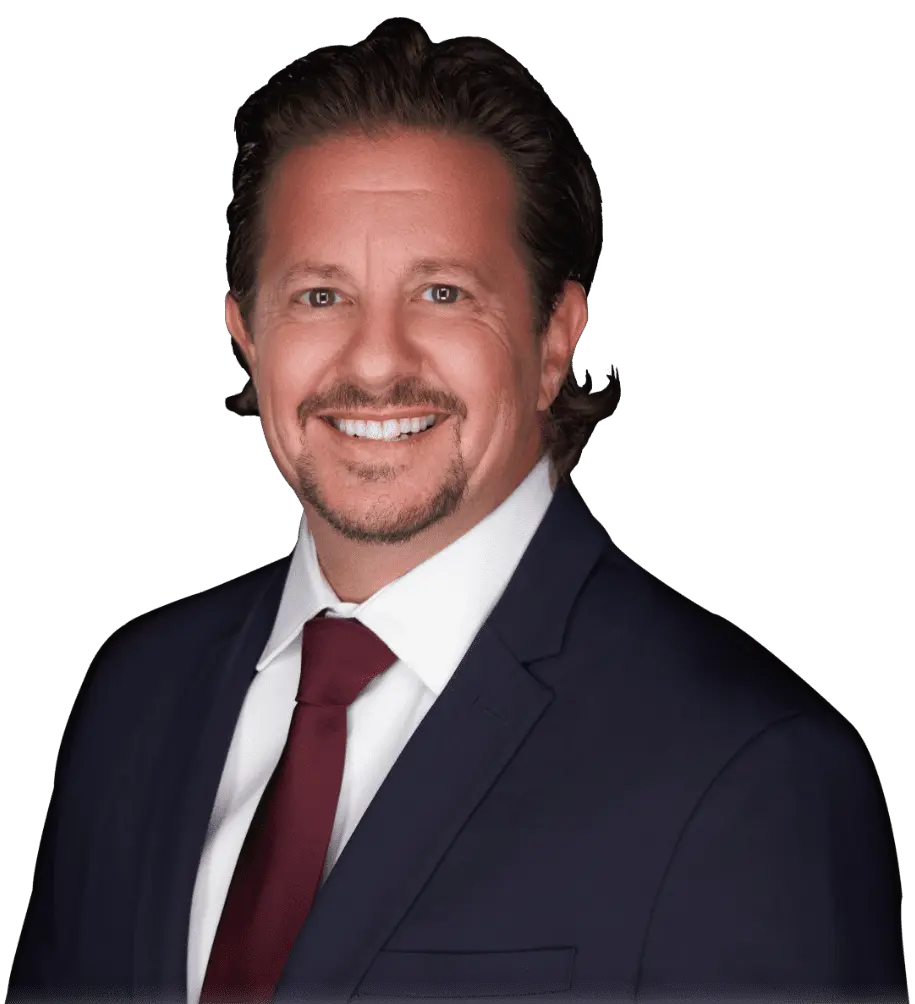
Robert B. Baker, Esq., B.C.S. — Board-Certified Civil Trial Lawyer. 30+ years of trial experience, more than $400 million recovered for clients. About Robert Baker →
This website provides general information. Your circumstances require an individual review.